Custom dinner napkins look like a simple order—pick a color, drop in a logo, done—until the box arrives and the napkins are too small for the table, too flimsy for the food, or printed with ink smeared across the part that touches a guest’s mouth. Getting it right means matching four decisions to how the napkin will actually be used: size, material, weight, and how your brand goes onto the cloth or paper. Here is how to work through those choices by setting, so the napkin you order is the napkin the moment calls for.
Start with size, because size signals the setting
Napkins are sold by their unfolded, flat dimension, not the folded size you see on the table, and the standard sizes line up closely with occasions. A beverage or cocktail napkin is small, meant to wrap a glass or hold a single passed bite. A luncheon napkin is a mid-size everyday option. A dinner napkin is the largest, sized to drape a lap through a full meal. Getting the size right is the difference between a napkin that reads as generous and one that reads as an afterthought.
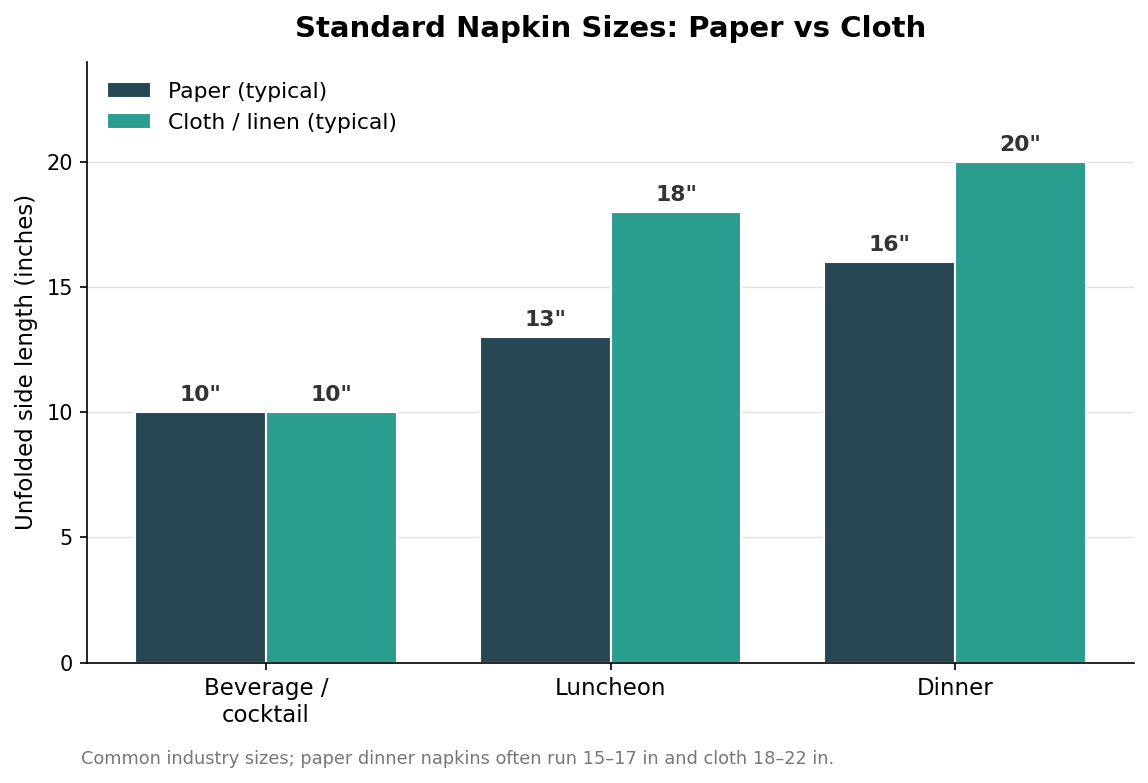
Paper and cloth run to slightly different standards, with cloth generally larger for the same occasion because it is meant to be seen and reused. For a proper dinner setting, a cloth napkin around 20 inches square feels substantial, while paper dinner napkins commonly run 15 to 17 inches. If you are unsure, size up rather than down; an oversized napkin looks intentional, while an undersized one looks like a cost cut.
Paper or cloth: matching material to service
Cloth is the choice when the napkin is part of the table’s impression—fine dining, weddings, banquets, any setting where guests linger and the linen is meant to be noticed and laundered afterward. Cotton and polyester-cotton blends dominate here, with pure cotton feeling the most premium and poly blends resisting wrinkles and stains better through repeated washing. Paper is the choice when speed, hygiene, and disposability matter: cafes, quick-service, catering, delivery, and high-volume events where laundering hundreds of cloths is impractical. Paper is also where custom printing gets economical at volume, because you are decorating a single-use surface rather than something that has to survive a wash cycle. Neither is objectively better; they answer different questions about how the meal is served and cleaned up.
Ply, weight, and how the napkin feels in hand
On paper napkins, ply is the thickness lever. Single-ply is thin and economical, suited to dispensers and quick-service counters where a napkin is grabbed and tossed. Two-ply is the casual-dining workhorse, with enough substance to feel decent without much cost. Three-ply reads as premium and is worth it for dinner service or events where the napkin is part of the experience. More plies mean more absorbency and a more cloth-like hand, but also more cost per napkin, so match the ply to how messy the food is and how much the napkin is meant to impress.
On cloth, the equivalent lever is fabric weight and weave. A heavier, tightly woven napkin drapes better, resists show-through, and survives more launderings, which is why hospitality-grade linens skew heavier than what you would buy for a home drawer. If a supplier quotes a fabric weight, treat a higher number as a proxy for durability and a more luxurious drape, and ask for a swatch before committing to a large run.
How many to order: planning by the guest
Under-ordering napkins is the most common and most avoidable mistake, because people plan one per guest and then watch the supply vanish. Guests use more than one, and messier or longer events push the count up fast.
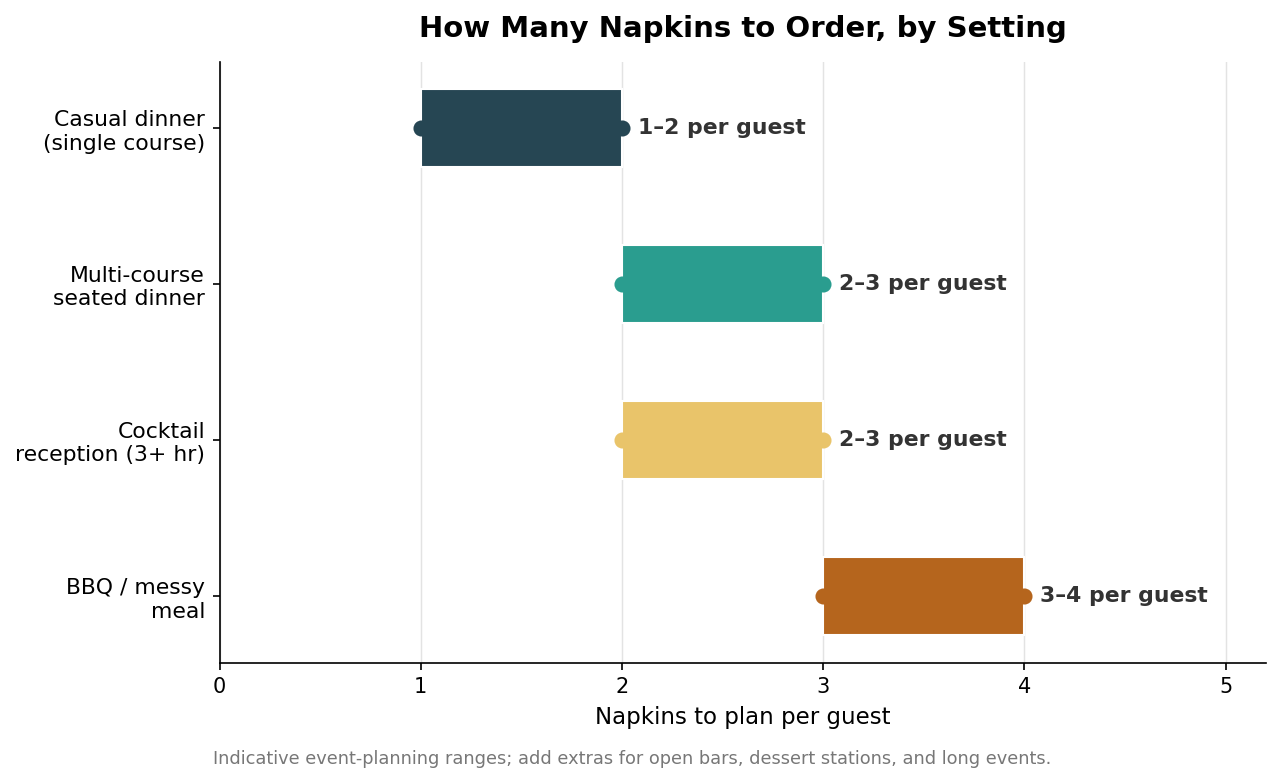
Use these as planning ranges rather than exact rules, and layer on extras for the things that drive consumption: an open bar, passed appetizers, a dessert station, or an event that runs past a few hours all add roughly one more napkin per guest. For a reception that flows into a seated dinner, plan cocktail napkins for the standing portion and dinner napkins for the table separately, since guests will use both. Ordering a comfortable surplus is cheap insurance; running out mid-event is not a mistake you can fix on the spot.
Printing your brand without wrecking the napkin
How you decorate the napkin should follow the material. On paper, a one- or two-color print is the economical standard and reproduces a clean logo well at low minimums; foil or hot-stamp treatments add a premium metallic look for weddings and upscale events at higher cost; full-color process printing is possible but pushes minimums and price up, so reserve it for designs that genuinely need it. Keep meaningful artwork toward a corner or edge rather than the dead center, both because the center is where a folded napkin creases and because it is the part most likely to touch food or a guest’s mouth. On cloth, embroidery gives a durable, tactile, upscale mark that survives laundering, while printing on fabric allows larger full-color designs but needs to be specified for wash durability. Whatever the method, request a proof and confirm exact brand colors before the run, because a color that drifts on a napkin is multiplied across every table.
Choosing the right napkin for your setting
Pull it together by working backward from the occasion. A fine-dining restaurant or wedding wants cloth dinner napkins around 20 inches, in cotton or a quality blend, with an embroidered or discreetly printed mark. A casual restaurant or cafe is well served by two-ply paper luncheon or dinner napkins with a simple one- or two-color logo. A quick-service or delivery operation leans on single- or two-ply paper sized to the food, printed economically, and ordered in volume. A cocktail reception needs small beverage napkins in quantity, planned generously per guest. And a catering or banquet program often mixes sizes—beverage napkins for the reception, dinner napkins for the meal—so plan each separately. Nail the size and material to the setting first, then let ply, weight, and print method follow, and the finished napkin will do exactly what you hired it to do.